
Deutsch: Autonomes Arousal und Schlaf / Español: Excitación autonómica y sueño /Português: Excitação autonômica e sono /Français: Éveil autonome et sommeil / Italiano: Eccitamento autonomo e sonno
You've had a long day, and by bedtime you're exhausted. But instead of drifting off, you notice your heartbeat, turn over several times, or find yourself worrying about tomorrow. Nothing is demanding your attention anymore, yet you still feel wide awake.
Sleep researchers sometimes describe this as heightened arousal. The brain and body have systems that help us stay alert, respond to stress, and adjust to what's happening around us. Those systems don't simply stop working because we've gone to bed.
The autonomic nervous system is involved in these changes, and the vagus nerve plays a part in how it works. But the relationship is more complicated than the familiar idea that the sympathetic nervous system keeps us awake while the parasympathetic nervous system puts us to sleep.
What Is Autonomic Arousal?
Autonomic arousal refers to changes in the activity of the autonomic nervous system, which helps control functions such as heart rate, blood pressure, breathing, and digestion without requiring us to think about them.
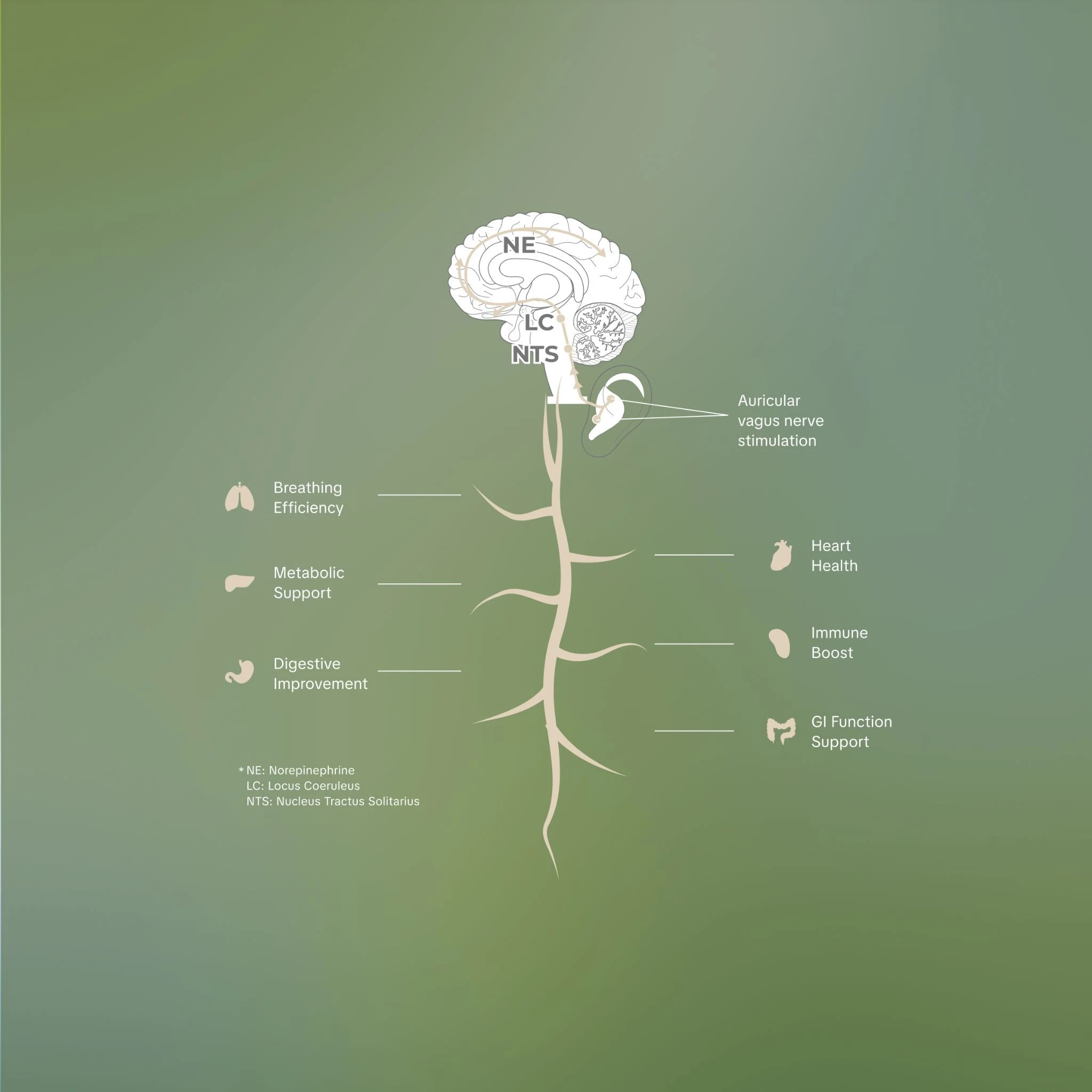
Two parts of this system are especially relevant. The sympathetic nervous system helps the body respond to demands, while the parasympathetic nervous system contributes to processes such as slowing the heart and supporting digestion. Both remain active in different ways throughout the day and night.
Think about what happens when you're running late. Your heart may beat faster as you rush out the door. Once you're sitting comfortably, it usually slows without you having to do anything. The autonomic nervous system is adjusting to what your body needs.
Stress can affect these responses, but an alert mind and an active sympathetic nervous system are not necessarily the same thing. You might lie awake worrying while your resting heart rate stays within its usual range. Someone else's heart rate may rise because they're warm, uncomfortable, or recovering from exercise.
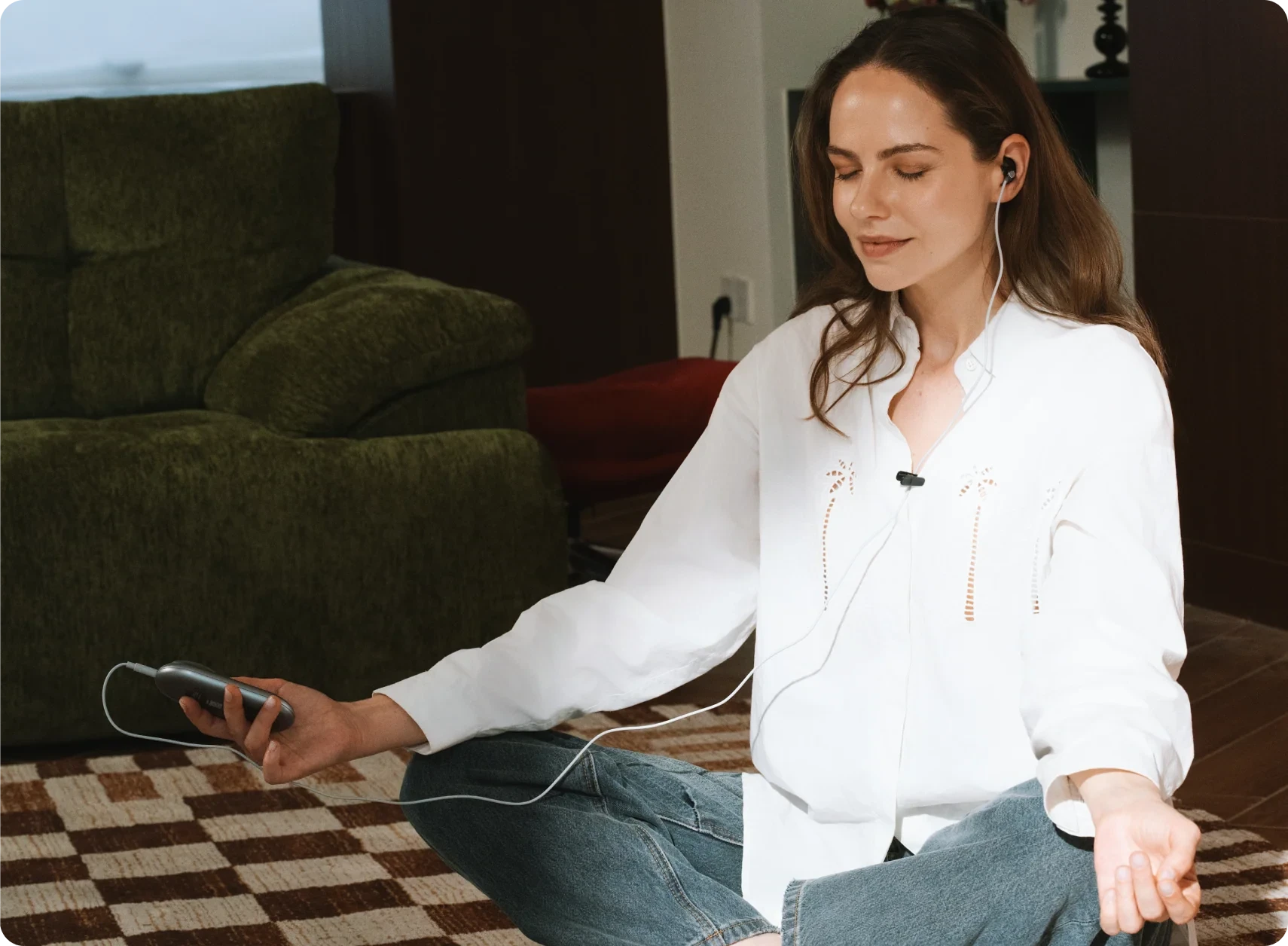
The vagus nerve is one of the pathways involved in autonomic regulation. It carries information between the brain and several internal organs, including pathways that influence heart rate. Researchers also study ways to stimulate vagal sensory pathways through the outer ear, a method that has led to ear-worn vagus nerve stimulation devices such as those offered by ZenoWell.
These devices belong to a growing area of non-invasive wellness technology, but the presence of vagal pathways in the ear does not mean that stimulating them will automatically make someone sleepy.
How Autonomic Activity Changes During Sleep
Your heart rate and breathing don't stay the same throughout the night. They change as you move between non-rapid eye movement (NREM) sleep and rapid eye movement (REM) sleep.
During NREM sleep, particularly deeper stages, heart rate and blood pressure generally decrease. Cardiac parasympathetic influences become more prominent, and sympathetic activity tends to be lower than during wakefulness.
REM sleep is different. Although you're asleep, heart rate and breathing can become more variable, and brief bursts of sympathetic activity may occur. This is a normal feature of REM sleep, not necessarily a sign that the body is under harmful stress.
De Zambotti et al. (2018) reviewed how brain activity and autonomic signals change together during sleep. Their work describes a close relationship between sleep stages and cardiovascular regulation, including changes associated with brief awakenings and other events during the night.
|
Sleep state |
What commonly happens |
What it tells us |
|
Quiet wakefulness |
Heart rate varies with breathing, posture, and activity |
Feeling calm doesn't necessarily mean you're about to fall asleep |
|
NREM sleep |
Heart rate and blood pressure generally fall |
Cardiac parasympathetic influence becomes more prominent |
|
REM sleep |
Heart rate and breathing may fluctuate more noticeably |
Brief autonomic activation can be part of normal sleep |
A wearable might show changes in heart rate or heart rate variability (HRV) during the night, but those numbers need context. Breathing patterns, medications, physical activity, age, and sleep stage can all affect the readings. HRV provides information about aspects of cardiac autonomic activity; it cannot tell you on its own whether your mind was calm or whether your sleep was restorative.
Sleep isn't a continuous state of complete physiological relaxation. The brain and autonomic nervous system keep working together as you move through different stages.
Why Can You Feel Tired but Still Be Too Alert to Sleep?
Feeling sleepy depends partly on how long you've been awake and where you are in your body's daily rhythm. Falling asleep also requires a change in brain activity. That process can be disrupted when attention remains fixed on worries, discomfort, or the effort to fall asleep.
Imagine getting into bed after a stressful meeting. You start replaying what happened, then wonder whether tomorrow will be just as difficult. When you notice you're still awake, you check the clock. Now you're also calculating how little sleep you'll get before morning.
Researchers often describe this combination of mental alertness and sleep-related worry as part of hyperarousal, a concept used to explain some features of insomnia.
But hyperarousal doesn't refer to one single measurement.
In a 2023 review, Dressle and colleagues examined evidence across cognitive-emotional, cortical, and physiological forms of arousal. They found support for the involvement of persistent mental activity and certain patterns of brain activity in insomnia. The findings involving autonomic measures such as heart rate and HRV were less conclusive (Dressle et al., 2023).
That helps explain why someone can struggle with sleep without showing an unusually high heart rate. Their thoughts may be keeping them engaged, or they may have developed a habit of worrying about sleep itself. Neither experience can be fully explained by a single autonomic measurement.
Persistent insomnia can also involve irregular sleep schedules, pain, medications, breathing disorders, and other health conditions. Feeling unusually alert at bedtime doesn't establish that a person's vagus nerve is underactive or that their autonomic nervous system is malfunctioning.
What Does the Vagus Nerve Actually Have to Do With Sleep?
The vagus nerve is often associated with the parasympathetic nervous system because it helps regulate several automatic functions, including aspects of heart rate and digestion. Most of its fibers are sensory, carrying information from the body toward the brain.
Those incoming signals are processed through brainstem pathways, including the nucleus tractus solitarius (NTS). The NTS connects with other regions involved in autonomic function and arousal.
That gives researchers a reason to investigate whether stimulating vagal sensory pathways might influence processes related to sleep. It doesn't mean the vagus nerve controls sleep by itself.
Sleep also depends on brain networks involved in circadian timing, sleep pressure, and the transitions between wakefulness, NREM, and REM sleep. The vagus nerve participates in a wider system rather than acting as a switch that turns sleep on.
One way researchers study this connection is through transcutaneous auricular vagus nerve stimulation, or taVNS. The technique applies small electrical pulses through the skin at selected areas of the outer ear associated with the auricular branch of the vagus nerve.
The cymba conchae, a recessed area in the upper part of the ear's bowl, is one commonly studied location. Researchers have also examined stimulation involving the cavum conchae and other ear regions. Different sites may engage different combinations of sensory nerves, so electrode placement matters.
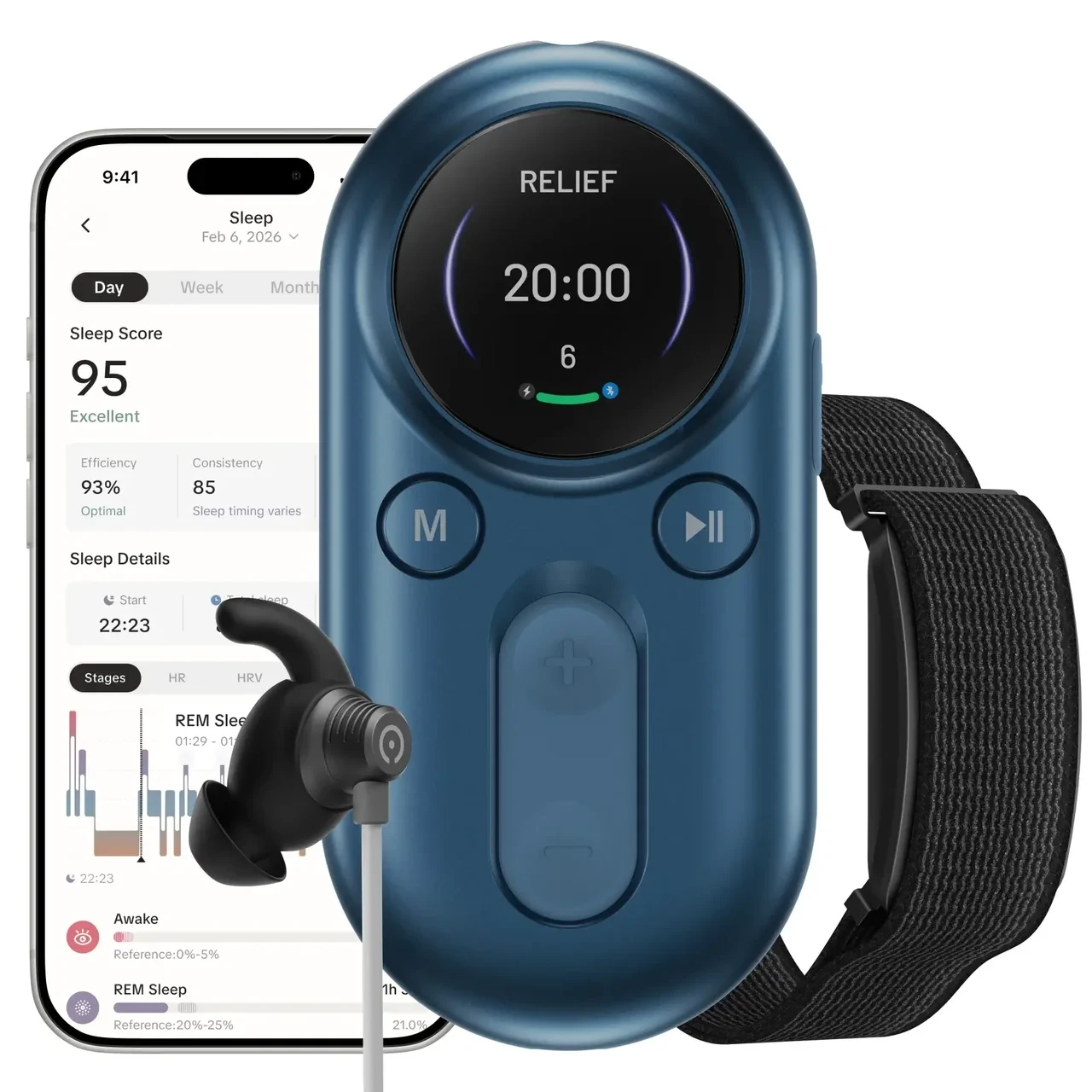
Readers unfamiliar with the approach can find more detail in this guide to auricular vagus nerve stimulation explained, including how ear-based stimulation differs from other forms of VNS.
Researchers have used brain imaging to investigate whether these signals reach regions associated with vagal pathways. In a small study involving 12 healthy adults, Frangos et al. (2015) compared stimulation at the left cymba conchae with stimulation at the earlobe. They observed changes in brain activity in regions including the NTS.
The experiment provided evidence that stimulation at the ear could engage relevant brain networks. The researchers weren't testing whether participants would fall asleep faster or sleep more soundly afterward.
What Can Vagus Nerve Stimulation Research Tell Us About Sleep?
To find out whether ear stimulation may affect sleep, researchers have moved beyond brain imaging and begun testing outcomes in people with diagnosed sleep problems.
A randomized clinical trial published in JAMA Network Open enrolled 72 adults with chronic insomnia disorder. Participants received active taVNS or sham stimulation for eight weeks, with 30-minute sessions twice daily on five days each week (Zhang et al., 2024).
The researchers measured sleep quality using the Pittsburgh Sleep Quality Index (PSQI), a questionnaire covering several aspects of sleep. Both groups improved, but the active-stimulation group showed a greater reduction in scores. The adjusted between-group difference was approximately 4.2 points after eight weeks, exceeding the study's predefined threshold for a clinically meaningful change. The trial also included a 12-week follow-up.
The findings suggest that the tested taVNS protocol may help some people with chronic insomnia. But there are several reasons not to apply those results to every ear-worn wellness device.
The trial involved patients with a diagnosed condition, a specific research intervention, and a repeated treatment schedule. A consumer device used for a short evening session may have different electrical settings, electrode placement, and intended use. The study also relied on a questionnaire for its primary sleep outcome rather than using objective sleep recordings as the main measure.
A positive clinical trial is valuable, but it doesn't establish that any product described as a vagus nerve stimulator will produce the same result.
For now, research into auricular stimulation and sleep is developing alongside the technology. Researchers still need to determine which protocols work most consistently, how well results carry over to different devices, and which people are most likely to benefit.
What the Vagus Nerve Cannot Explain About a Restless Night
You might wake at 3 a.m. with your heart beating faster than usual, but that doesn't tell you why you woke up. It could follow a dream, a brief arousal from sleep, or a change in breathing. Room temperature, alcohol, medication, illness, and other factors can also affect your heart rate.
The same uncertainty applies when you can't fall asleep. A busy mind, an irregular bedtime, discomfort, or a sleep disorder may be involved. There's no reliable way to diagnose a vagus nerve problem from a single restless night or a wearable's HRV score.
Autonomic measurements can help researchers understand how the body behaves during sleep. They are less useful when treated as a simple explanation for every person's sleep difficulties.
If stress is keeping you awake, it may help to address the unfinished thoughts, work demands, or bedtime habits that are getting in the way. If sleep problems persist, a healthcare professional can assess other possible causes. Chronic insomnia has established treatments, including cognitive behavioral therapy for insomnia, that should not be replaced by an unproven wellness device.
The vagus nerve gives researchers one useful way to study communication between the brain and body. It helps explain parts of cardiovascular regulation and offers a possible route for studying neuromodulation. It cannot explain every restless night, and stimulating it is not the same as treating the many different reasons people struggle to sleep.
Similar Terms
Because "autonomic arousal and sleep" is not a single technical term, readers may encounter related concepts that are easy to confuse with one another:
- Hyperarousal – the broader scientific model describing persistent cognitive, emotional, and physiological activation in insomnia; autonomic arousal is only one possible component.
- Sleep onset latency – the measured time it takes to fall asleep; a long latency can be a sign of heightened arousal but is not the same thing.
- Sleep pressure (Process S) – the steady build-up of the need for sleep during waking hours; high sleep pressure does not guarantee falling asleep quickly.
- Circadian rhythm – the body's internal daily timing system, which determines when sleep is easiest regardless of how tired you feel.
- Heart rate variability (HRV) – a measurement reflecting aspects of cardiac autonomic activity; often marketed as a sleep quality score, but not a direct measure of restorative sleep.
- Vagus nerve stimulation (VNS) – the general term for techniques that stimulate the vagus nerve, ranging from implanted medical devices to transcutaneous auricular stimulation (taVNS); the research evidence differs greatly between these forms.
Summary
Sleep is not a simple on/off state, and the autonomic nervous system does not stop working at bedtime. Heart rate, breathing, and blood pressure continue to change throughout the night, following patterns that differ between NREM and REM sleep. Feeling exhausted while lying awake is a common experience, and researchers often describe it through the concept of hyperarousal – a mix of mental alertness and worry about sleep that is not fully captured by any single bodily measurement. The vagus nerve is a genuine part of this system: it carries signals between the brain and internal organs, and stimulating vagal pathways at the ear is an active area of research, including one promising randomized trial in chronic insomnia. But a positive study of a specific clinical protocol does not turn every consumer device into a proven treatment, and no wearable score or single restless night can diagnose a vagus nerve problem. If sleep difficulties persist, established options such as cognitive behavioral therapy for insomnia remain the recommended starting point.
References
de Zambotti, M., Trinder, J., Silvani, A., Colrain, I. M., & Baker, F. C. (2018). Dynamic coupling between the central and autonomic nervous systems during sleep: A review. Neuroscience & Biobehavioral Reviews, 90, 84–103.
Dressle, R. J., et al. (2023). Hyperarousal in insomnia disorder: Current evidence and potential mechanisms. Journal of Sleep Research, 32(6), e13928.
Frangos, E., Ellrich, J., & Komisaruk, B. R. (2015). Non-invasive access to the vagus nerve central projections via electrical stimulation of the external ear: fMRI evidence in humans. Brain Stimulation, 8(3), 624–636.
Zhang, S., Zhao, Y., Qin, Z., et al. (2024). Transcutaneous auricular vagus nerve stimulation for chronic insomnia disorder: A randomized clinical trial. JAMA Network Open, 7(12), e2451217.
--